Roof Rat Control in San Antonio
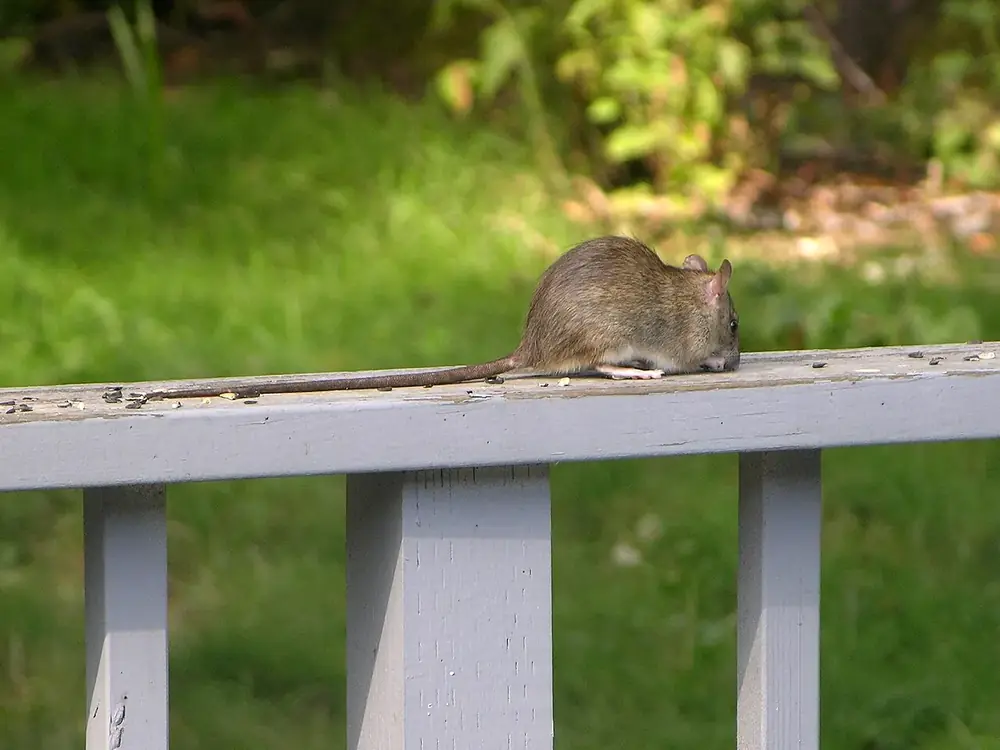
If the noise is over your head and it starts after dark, think roof rat first. This is the slim, dark rat with big ears and a tail longer than its body. It climbs like a squirrel. It walks the top of a fence, runs a cable line from the pole to your eave and drops onto the roof from a tree limb that grew a little too close.
The urban entomology team at Texas A&M notes that roof rats are common in cities across the South, and San Antonio fits the pattern. Our mild winters, our backyard pecans and citrus, and all the ivy and bamboo along back fences give them food and cover most of the year. Once one finds a gap at the roofline, the attic becomes home base.
What Roof Rats Leave Behind
Most people call because of the sound: a quick run across the ceiling, a scratch inside the wall near the top, sometimes a thump when one jumps down onto the insulation. Then you go up the attic ladder with a flashlight. Here's what you might find:
- Droppings about half an inch long with pointed ends, scattered along the top plates and on the ductwork
- Dark, greasy smudges on rafters and where a wire or pipe enters the attic
- Insulation tunneled or flattened into trails
- Chewed flex duct, wire jackets or the corner of a stored box
- Hollowed out oranges or grapefruit still hanging on the tree, or pecan shells piled in an odd spot
How They Get From the Yard Into the Attic
Roof rats rarely come in through the front door. They come in high. A rat in the backyard climbs a tree, a trellis or a corner of rough brick, then walks the roof until it finds a gap. Texas A&M notes that a roof rat can fit through a hole about the size of a quarter. On a lot of San Antonio houses the gaps sit in the same handful of spots: where the roof deck meets the fascia, around the plumbing vent boots, at the corners of soffits, and where the AC line set or cable runs through the wall.
Older homes with wood soffits and gable vents, like many of the 1920s through 1950s houses in Alamo Heights and Terrell Hills, tend to have more of those openings. Newer two-story homes in Stone Oak have fewer, but the complicated rooflines leave little gaps where one roof plane tucks under another. The roof rat guide goes over the trees and plants that act as ladders.
- Tree limbs and palm fronds touching or hanging over the roof
- Gaps at the roof-to-fascia joint and soffit corners
- Gable and ridge vents with torn or missing screen
- Utility lines and AC line sets running into the wall
Noise in the attic tonight? Talk to someone who handles San Antonio rodents.
Call (210) 955-2948
What a Technician Does About It
The tech should start outside. They walk the roofline from the ground, and from a ladder if needed, and mark every gap a rat could use. Then they go up into the attic to see where the activity is heaviest. Snap traps set along the rafters and the top plates do most of the work up there. Bait, if they use any, should go in locked stations outside, not loose in the attic where a rat can eat it, crawl into a wall and die.
Trapping only clears the rats that are already inside. The real fix is sealing the roofline with metal mesh, flashing and sealant so the next rat can't follow. If the attic insulation is full of droppings, ask about attic cleanup too. The company that comes out sets the price after they've looked. We don't quote jobs.
Things You Can Do This Weekend
Cut back any limb that hangs over the roof or comes within a few feet of it. Pick up fallen fruit and pecans instead of leaving them on the ground. Keep pet food inside at night. Store bird seed in a metal can. None of that gets rid of rats already in the attic, but it makes your place less interesting than the house next door.
If you hear them every night for a week, it's time to call. Roof rats breed fast in a warm attic, and the longer they stay the more insulation and ductwork they ruin.
Questions From Callers
Are roof rats the same as the rats in the street?
No. Roof rats climb and nest up high. Norway rats are heavier, dig burrows and stay low. You can have both on one property. See Norway rat control for the ground-level kind.
Will the rats leave once it cools off?
Not usually. A San Antonio attic stays livable for a rat all year, so they tend to stay put until the gaps are closed.
Can I just set traps in the attic myself?
You can, and you'll catch some. If new rats keep showing up after a week or two, there's an open gap somewhere on the roof.
We take calls from Alamo Heights, Olmos Park and Terrell Hills, Stone Oak, Timberwood Park, Leon Valley, Castle Hills and Shavano Park, Medical Center, Windcrest, Live Oak and Universal City, Leon Springs and Fair Oaks Ranch, Beacon Hill and Five Points, South Side and the Missions.